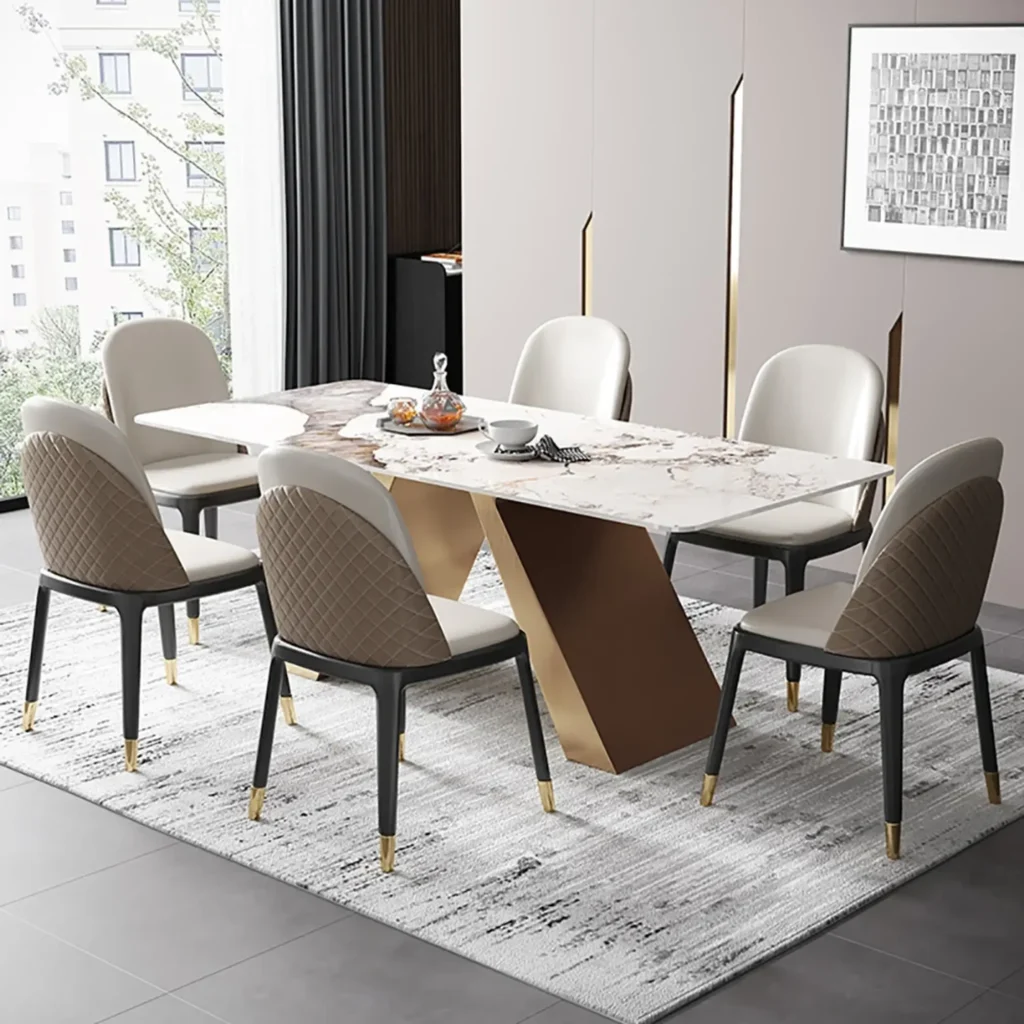
PVD stands for physical vapor deposition, a process used to apply thin surface coatings in a vacuum. On furniture, the term describes a finish treatment, not the entire construction of the piece. Before buying, check the base metal, the coating specification and the care instructions separately.
What does a PVD finish tell you?
A PVD label identifies a coating process, but it does not tell you everything about coating thickness, preparation, adhesion or performance. Those details depend on the particular product and manufacturing specification. For a technical introduction, see Semicore’s explanation of PVD coating.
Do not treat a gold-coloured surface as proof of a PVD finish. Equally, a PVD finish is not a claim that furniture is made from solid gold. Read the written description rather than inferring the process from colour.
Separate the frame from the finish

The Sajosamaan luxurious marble-top dining table is listed with an Italian composite marble top and PVD coating on its stainless-steel base. These describe different components. The finish description does not establish the top’s composition, the steel grade or the exact package contents.
To evaluate the top separately from the base finish, compare composite marble and natural marble. Before placing an order, use our checklist to check the full dining-table specification, including package contents, delivery and assembly.
Five questions to ask before ordering
- What is the frame material, and is a specific metal grade stated?
- Which parts receive the PVD finish, and which use another treatment?
- Can the seller provide close-up photographs or a finish sample?
- Which cleaners and maintenance methods are approved for this exact finish?
- What does the written warranty say about scratches, colour changes and coating damage?
Is PVD-coated furniture scratch-proof?
Do not assume so. A coating’s performance depends on its specification and use conditions. Ask for product-specific evidence before relying on claims such as scratch-proof, rust-proof or lifetime finish. A general description of PVD technology is not a test report for an individual table.
Get care instructions in writing
Ask for separate instructions for the metal finish and tabletop. Do not assume that a cleaner suitable for one surface is suitable for the other. Confirm any restrictions on abrasive tools, polishing compounds, chemicals and exposure conditions before cleaning. Keep these instructions with the invoice.
Choosing a finish for your home
Compare finish photographs in the context of your flooring, upholstery and lighting. Ask whether the appearance is brushed, polished or another texture, and whether a sample is available. Screens and room lighting can alter how colours appear.
Explore Sajosamaan’s dining-table collection and centre-table collection, then confirm the finish on the specific product you shortlist. Choose using verified construction, dimensions and written policies—not the coating label alone.